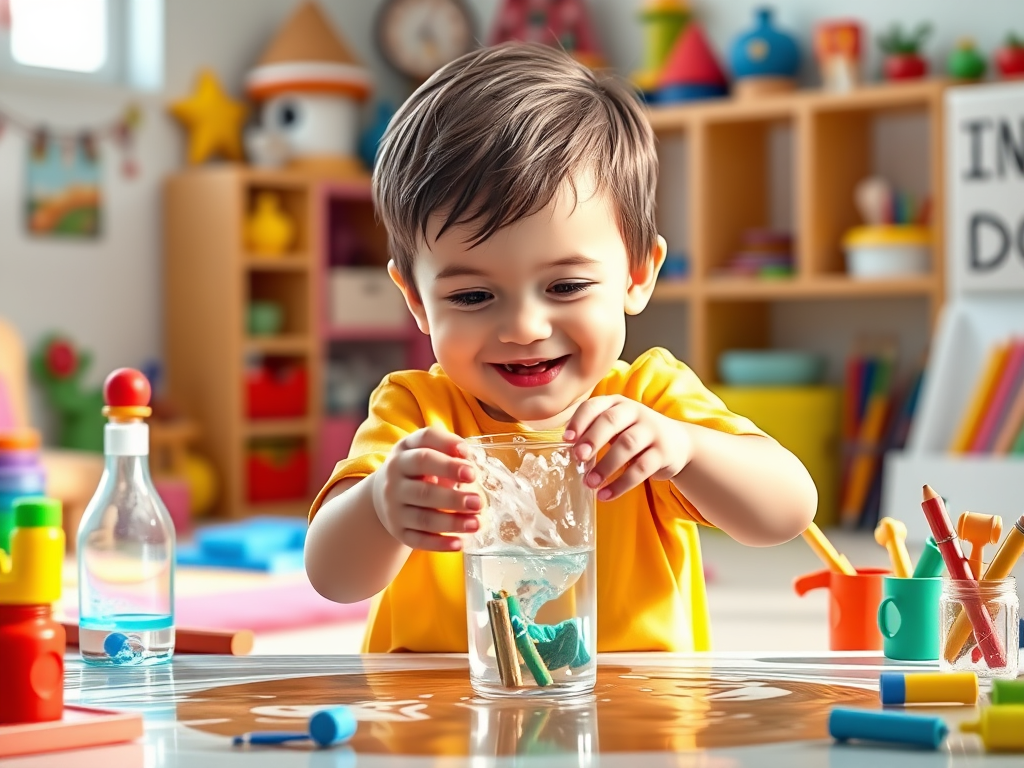
Have you ever heard of STEAM and wondered what on earth it has to do with your curious toddler or preschooler who’s currently obsessed with pouring water from one cup to another for the tenth time today? Or is asking another ‘why’ question on top of the 100 others they have already asked?
Well, that playful pouring and questioning is actually a wonderful example of early science and math exploration, and it’s part of what is called STEAM learning.
What is Steam?
STEAM stands for:
- Science
- Technology
- Engineering
- Art
- Maths
In early childhood, STEAM isn’t about sitting children down with equations or coding software. It’s all about encouraging natural curiosity, problem-solving, and creativity through hands-on play and exploration. And the beautiful thing is, toddlers and preschoolers are wired to think this way.
Why does STEAM matters in Early Years?
Children between 18 months and 5 years are in a powerful stage of brain development. They’re learning how the world works, experimenting, and making sense of patterns, cause and effect, and even basic logic—all through play.
STEAM learning helps children to:
- Build critical thinking and reasoning skills
- Develop language and communication
- Strengthen motor skills and coordination
- Cultivate creativity and persistence
- Gain confidence in problem-solving
By nurturing STEAM from a young age, we help our little ones become curious, capable learners for life.
How can you support STEAM at home (without fancy equipment)?
You don’t need to be a scientist or buy expensive toys to support STEAM learning. It’s all about providing opportunities for exploration, asking open-ended questions, and letting your child lead.
Here are some easy ways to weave STEAM into everyday play:
S – Science
- Let your little one explore water play (pouring, sinking/floating, freezing/melting).
- Go on a nature walk and talk about leaves, bugs, clouds, and shadows.
- Grow a plant together and observe its changes over time.
T – Technology
- Introduce simple cause-and-effect toys (e.g. pop-up toys, buttons, levers).
- Take photos together and talk about what you see.
- Use a child-friendly torch to explore light and shadows in a dark room.
E – Engineering
- Build with blocks, Duplo, or recycled boxes.
- Create ramps for toy cars and experiment with speed and height.
- Encourage trial and error: “Oops, that fell down! What could we change?”
A – Art
- Let your little one explore paints, crayons, glue, and all things messy.
- Offer loose parts for collage or sculpture (buttons, lids, fabric).
- Focus on process over product – there’s no right or wrong way to create!
M – Maths
- Count socks as you fold, fruit at snack time, or steps as you climb.
- Sort toys by size, shape, or colour.
- Talk about patterns, sizes, more/less, heavy/light.
STEAM learning is all around you; it’s in the bathtub, the garden, the kitchen, and the toy shelf. And the best part is that your child is already engaging in it naturally. As a parent, your role is simply to notice, encourage, and join the wonder.
Karmal x
(Visit my website www.learninglighthouse.net for freebies!)
p.s. If you ever feel unsure about how to support your little learner, inside my Facebook group I share weekly tips and activity ideas designed to help you support your child’s development.
Click here to join.
✨Need help with getting your preschooler to grow and thrive at home? My Developmental Activity Cards give you 30 simple play-based activities that support learning in a fun and playful way. I guide you through each activity step by step. Just click on the relevant link below to learn more about each set.
Leave a Reply