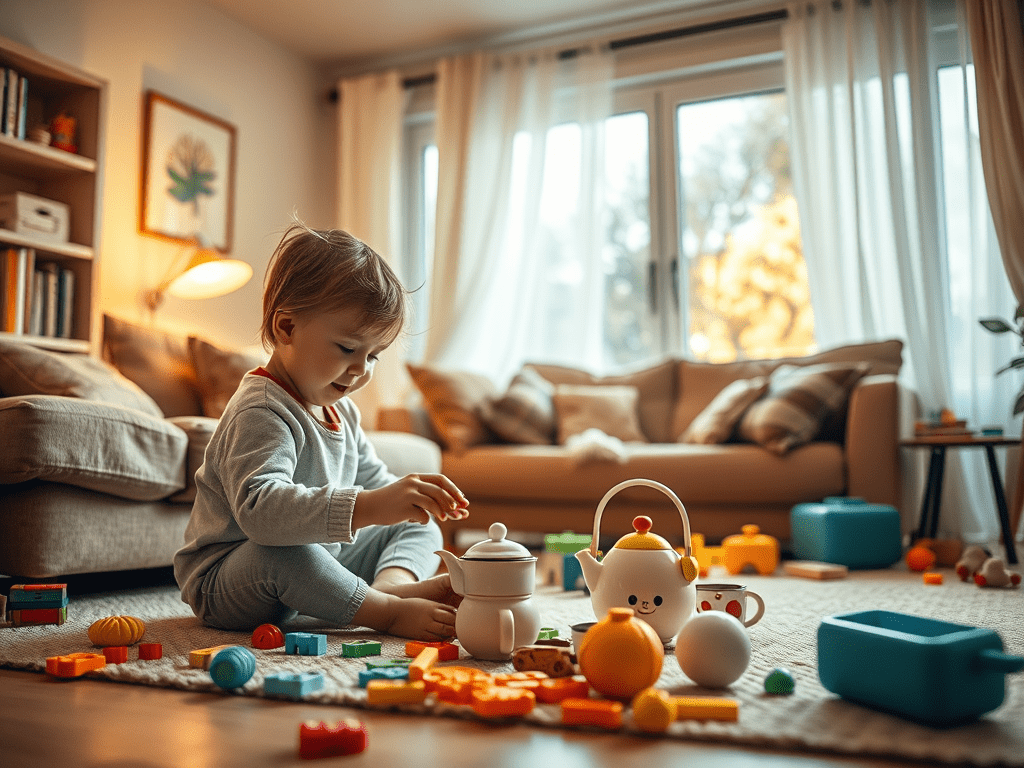
You’ve probably heard the phrase “learning through play.” But when you’re standing in your living room watching your toddler or preschooler:
-Tip blocks onto the floor
-Repeat the same game
-Pretend to make tea for the hundredth time
It can be hard to see the learning.
If you’ve read my post on why play is essential for toddlers and preschoolers, you’ll know play supports physical, cognitive, social, and emotional development.
But what does that actually look like in real life?
What Learning Through Play Is (And What It Isn’t)
Learning through play is:
✔️Child-led
️✔️Active
✔️Engaging
✔️Meaningful
It is not:
❌Worksheets intended to drill children on what they do/do not know
❌Constant adult direction
❌Performance-based
When children are deeply engaged, they are learning, even if it looks simple.
What It Looks Like at Different Ages
18 Months – 2 Years
You might see:
- Filling and emptying containers
- Posting objects into holes
- Pushing cars back and forth
- Exploring textures
They are learning cause and effect, coordination, early maths foundations, and sensory awareness. Read my blog on how you can support your toddler’s development at home.
2 – 3 Years
You might see:
- Sorting by colour
- Matching shapes
- Simple pretend play
- Repeating familiar songs
They are building language, memory, and early categorisation skills.
3 – 4 Years
You might see:
- Playing shop
- Acting out stories
- Creating imaginary worlds
- Taking turns in simple games
When your child is playing shop, they are practicing counting, negotiation, vocabulary, emotional regulation, and perspective-taking – all at once.
It looks like fun. It is deep learning.
The Hidden Skills Being Built
Beneath the surface, your child is developing:
- Focus and attention
- Working memory
- Emotional regulation
- Communication
- Problem-solving
- Early maths and literacy foundations
These are the skills that later academic learning sits on.
If you want a fuller picture of how these areas connect, revisit my guide on why play is essential for early growth.
Why Learning Through Play Doesn’t Always Look ‘Educational’
Learning through play can look:
- Messy
- Repetitive
- Loud
- Simple
It rarely produces a finished product to display.
🚩 A common mistake parents make: Interrupting play to “upgrade” it – adding too many instructions or turning it into a lesson.
Sometimes the best support is stepping back.
How to Gently Extend Play (Without Taking Over)
If you want to support learning without controlling it, try:
- Adding one thoughtful question
- Introducing one new prop
- Modelling a new word
- Stepping back again
- Small nudges – not takeovers.
Children learn best when they feel ownership of the play.
FAQs
What are examples of learning through play?
Pretend play, sensory exploration, building with blocks, role play, and everyday routines done together.
How does pretend play help development?
It strengthens language, empathy, emotional regulation, and problem-solving.
Is sensory play educational?
Yes – it builds early science thinking, vocabulary, and motor skills.
Does my child need structured activities?
Not constantly. Child-led play supported by responsive adults is highly effective.
If you’ve ever wondered, “Is this actually helping their development?” you’re not alone. I send out simple weekly emails explaining what’s really happening beneath your child’s play — and how you can support it without pressure or overwhelm. Click here to receive yours – it’s free!
Play is powerful, and now you are seeing why.
Karmal x
👉🏼 Visit my website for free resources, video tutorials and useful play tips.
👉🏼 If you need more support or ideas in a welcoming community of other parents, join my free Facebook group here
👉🏼 Need help thinking of easy activities you can do with your toddler or preschooler at home? My Developmental Activity Cards give you 30 simple play-based activities that support learning in a fun and playful way. I guide you through each activity step by step. Just click on the relevant link below to learn more about each set.
Leave a Reply