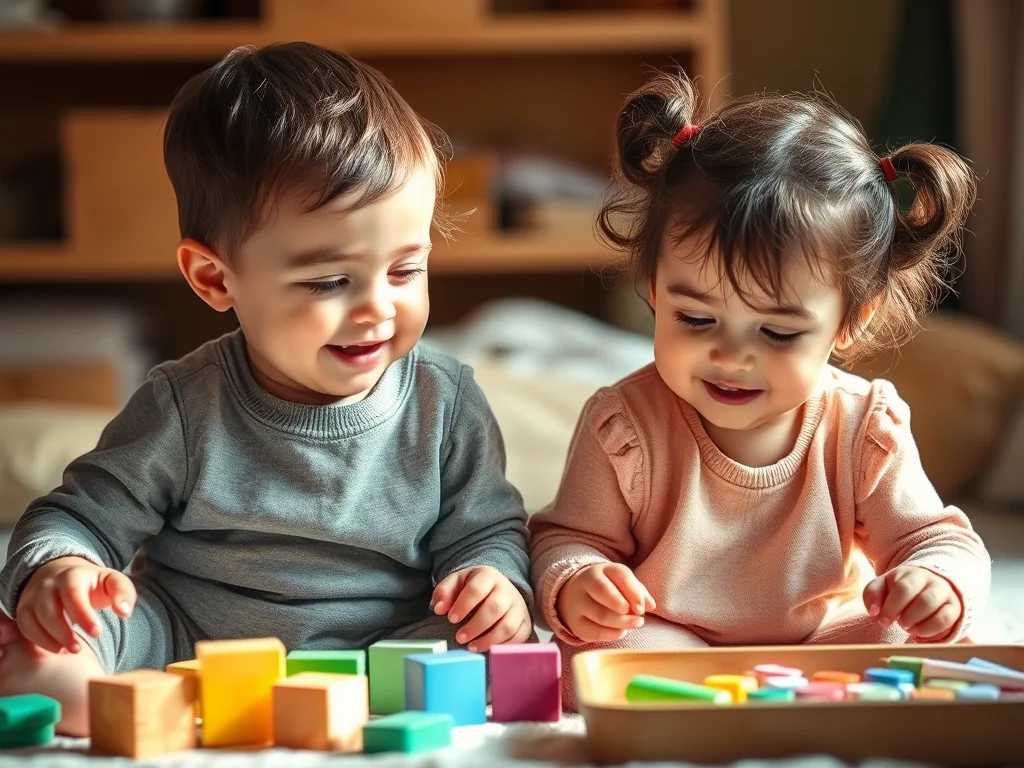
We, as parents, can sometimes worry about how our child is playing – or not playing with others – and it’s often followed by another question: What should I be doing to help?
It’s easy to feel like you need to step in, encourage sharing, or prompt interaction, especially when other children seem more social. But, the reality is that social play develops best when it’s supported gently, not rushed.
If you haven’t already, you may find it reassuring to read The Stages of Play: How Toddlers and Preschoolers Learn to Play (and Why It Matters) before diving in.
Why ‘pushing’ social play often backfires
As parents, we are well-meaning and often try to encourage our little ones to play with other children by saying things like:
- “Go and play with them!”
- “Share nicely.”
- “Ask them what they’re doing.”
But for young children who aren’t developmentally ready, this has the opposite effect and can:
- increase anxiety
- disrupt focus
- reduce confidence around peers
The exact opposite of what we are trying to encourage! Social play isn’t a skill children learn through instruction, it grows through readiness, safety, and repeated experience.
What actually helps social play develop?
Rather than teaching children how to play socially, we can create conditions that support it naturally. Things like:
- predictable routines
- familiar play environments
- allowing time to observe before joining in
- adults who model calm, respectful interaction
This is especially important for children who are spending time in solitary, onlooker, or parallel play. (The different stages are explained more clearly here.)
Simple play setups you can do to support social development
You don’t need complex activities or structured games. Have a playdate and include easy setups such as these:
- two sets of the same toy (blocks, cars, dolls)
- side-by-side art activities
- water or sand play with individual tools
- open-ended pretend play materials
These setups invite connection without requiring it.
For a deeper understanding of why side-by-side play matters so much, you might like this post: Is Parallel Play Normal? What It Means When Toddlers Play Side by Side.
What to say (and not say) during play
I love having conversations with toddlers and preschoolers – I truly believe it’s the best way to promote language development. However, I learned something early on when my son was young; sometimes it’s best to say nothing. Yup. Say nothing. And here’s why; language can either support or interrupt play. When my son was ‘in the zone’ of play, my talking to him would interrupt his flow. So, be selective and try these instead:
- narrate what you see (“You’re both building towers.”)
- reflect feelings (“That was frustrating when it fell.”)
- stay nearby without directing
Try to avoid quizzing, correcting or forcing interaction
Sometimes, saying less allows play to grow more.
Trust the process
Children move toward cooperative play when they’re ready – not when they’re pushed.
By offering time, space, and simple opportunities to play near others, you’re giving your child exactly what they need.
Looking for ongoing support?
If you’d like gentle, age-appropriate play ideas and clear explanations delivered weekly, without pressure or overwhelm, my newsletter is designed for real family life.
👉 You can subscribe here to receive calm, practical play support straight to your inbox.
Karmal x
👉🏼 Visit my website for free resources, video tutorials and useful play tips.
👉🏼 If you need more support or ideas in a welcoming community of other parents, join my free Facebook group here
👉🏼 Need help thinking of easy activities you can do with your toddler or preschooler at home? My Developmental Activity Cards give you 30 simple play-based activities that support learning in a fun and playful way. I guide you through each activity step by step. Just click on the relevant link below to learn more about each set.
Leave a Reply