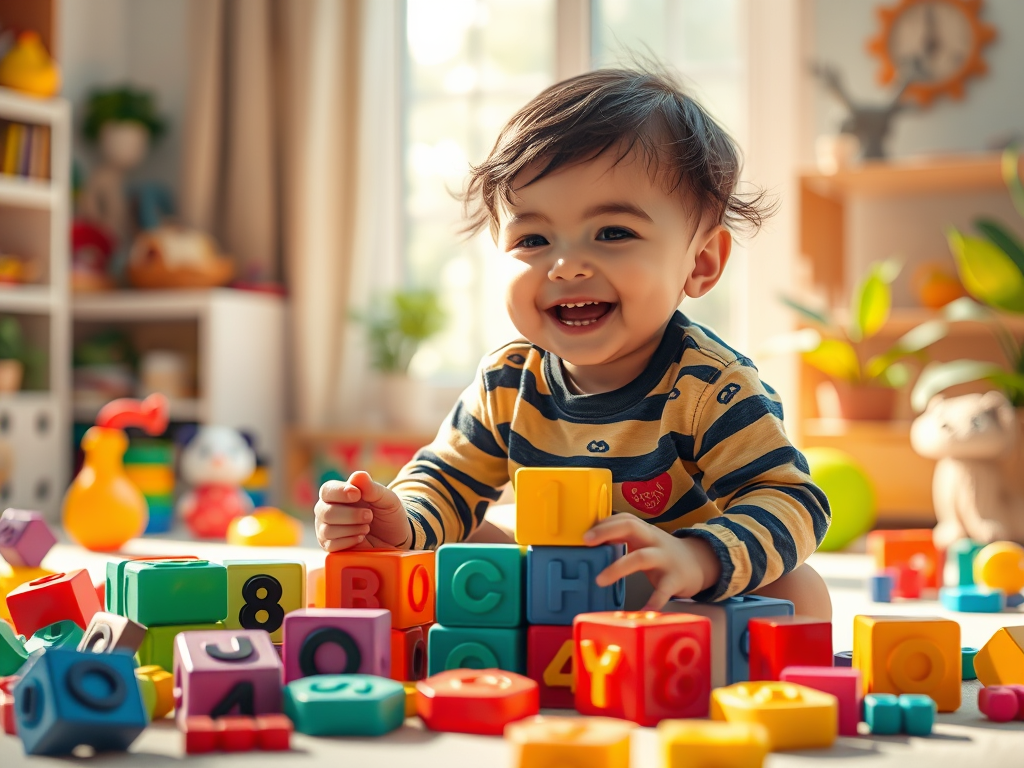
If you’ve spent time in any toddler or preschool parenting group, you’ve probably seen this question pop up over and over again:
“At what age did your little one start learning their numbers, ABCs, or colours?”
It’s a question that comes from a place of love – we want to make sure our children are on track and thriving. But the truth is: there isn’t one ‘right’ age for these skills. Children develop at different paces, and early learning looks more like a journey than a checklist.
What’s Typical?
It can help to know the general ranges for when children may start showing these skills. Keep in mind these are averages; some children may show interest earlier, others later, and both are perfectly normal.
- Colours
- Many toddlers begin to recognise and point out colours between 18 months and 2 years, but doing this consistently usually develops closer to 3 years. Mastery often isn’t solid until age 4 (American Academy of Pediatrics, 2021).
- Numbers
- Reciting numbers “1, 2, 3…” etc. often starts around age 2.5 to 3 years. However, actually understanding quantity i.e. realising that “three” means three objects, develops more gradually through hands-on play, usually between 3–4 years.
- Letters & sounds
- Children often enjoy singing the alphabet song by age 2–3 years, but recognising individual letters typically begins between 3–4 years. Associating letters with sounds (“b =‘buh’”) is part of early literacy and usually becomes more consistent in the preschool years (ages 4–5). (U.S. Department of Education, 2020).
3 Tips to Support Early Learning Without Pressure
1. Focus on Play, Not Performance
Research shows young children learn best through play (Hirsh-Pasek et al., 2009). Instead of drills or flashcards, let them explore:
- Sort blocks or toys by colour.
- Count steps as you climb together.
- Spot letters on cereal boxes or street signs.
These playful experiences build a strong foundation for learning.
2. Use Everyday Moments
Everyday routines are golden opportunities for learning:
- Count apple slices at snack time.
- Ask, “Can you find your red shoes?” before heading out.
- Trace the first letter of their name in the sand or with finger paint.
This makes learning meaningful and memorable because it’s connected to their real world.
3. Celebrate Effort – Not Just Accuracy
When your child calls green ‘blue’, that’s still progress – they noticed and labelled.
Research into early childhood learning shows that praise for effort builds persistence and resilience (Dweck, 2006). Instead of focusing only on right answers, encourage curiosity with phrases like, “I love how you noticed that colour!”
The Bigger Picture
Knowing numbers, letters, and colours is exciting, but they are just pieces of early learning. What matters most in the toddler and preschool years is building curiosity, problem-solving, and confidence. These social-emotional and cognitive skills will help your child succeed long after they’ve mastered their ABCs.
If you find yourself comparing your child to others, remember: development is a marathon, not a sprint. Your child doesn’t need to be ahead to be thriving, they just need the freedom to learn at their own pace, with your loving support along the way.
A Little Encouragement from Me to You
If you’ve ever worried about whether your little one is ‘behind’, please take a deep breath. You’re not alone, and your child is learning more every single day than you probably realise. The truth is, these early years are about so much more than ABCs and 123s. They’re about building curiosity, connection, and confidence.
So next time you see that question pop up in a parenting group, remember: it’s okay if your child’s journey looks a little different. They’ll get there, in their own time – and you’re doing an amazing job helping them along the way. 💛
Karmal x
(Visit my website www.learninglighthouse.net for freebies!)
✅ If you need more support or ideas, join my free Facebook group here.
✅ I’ve created a free guide of 5 Easy Activities to do with Your Toddler or Preschooler. You’ll get simple play ideas to support your child, without the overwhelm. Download your free guide here!
Leave a Reply