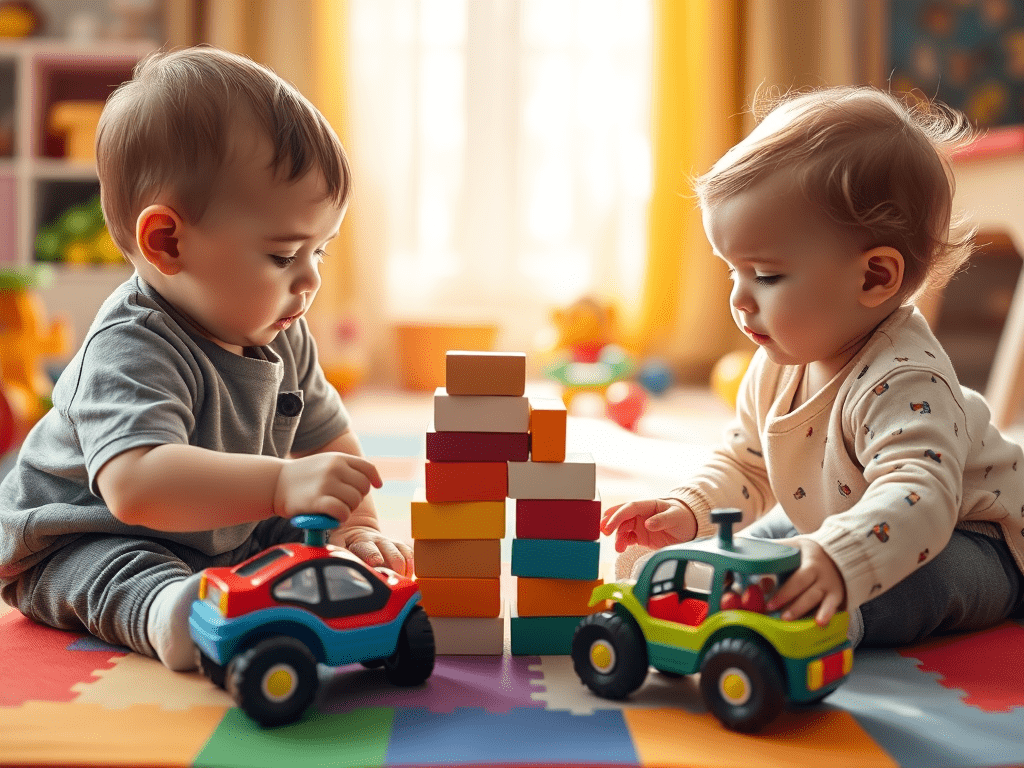
If you’ve ever watched your toddler playing happily next to another child – stacking blocks, pushing cars, drawing – but not actually interacting, you might have wondered: Is this normal? Shouldn’t they be playing together by now?
The short answer is yes – this is completely normal. It’s called parallel play, and it’s a vital stage of development for toddlers and young preschoolers.
If you’re new to the idea of play developing in stages, you may find it helpful to start with a broader overview in this post: The Stages of Play: How Toddlers and Preschoolers Learn to Play (and Why It Matters).
Let’s start by asking the question: What is parallel play?
Parallel play is when children play alongside one another. They often have similar toys or materials, but play without direct interaction with each other. You may have even seen the following:
- two children sitting side by side with blocks or cars
- children copying each other’s actions without speaking
- brief glances or smiles, but no shared goal
Parallel play typically appears between 2 and 3 years, though some children show it earlier or later.
Why do toddlers play next to each other and not together?
To adults, parallel play can look unsocial or even awkward, but, developmentally, it makes a lot of sense.
At this age:
- toddlers are still learning to regulate emotions
- their attention is limited
- language skills are still emerging
Playing alongside another child allows them to enjoy social closeness without the pressure of sharing, negotiating, or communicating clearly.
This stage gives children the safety they need to practise being around others.
What are children learning during parallel play?
Even though it looks simple, a lot is happening beneath the surface. During parallel play, children are developing:
- Social awareness – noticing others and their actions
- Language – hearing words and seeing how play ideas develop
- Confidence – feeling safe near peers
- Imitation skills – copying play ideas is a powerful learning tool
(These skills form the foundation for later ‘associative’ and ‘cooperative’ play.)
When (and how) parallel play changes
As children grow, often closer to age 3, you may start to notice small shifts e.g:
- sharing toys or materials briefly
- commenting on what the other child is doing
- playing with a similar idea, but adding interaction
This is known as associative play and is a natural next step.
If you’re wondering how to gently support this transition without pushing it, this post will help: How to Support Your Toddler’s Social Play (Without Forcing It).
Some children spend longer in parallel play than others – and that’s okay. Development isn’t linear, and children often move back and forth between stages depending on how they’re feeling or who they’re with.
If your child feels safe, engaged, and curious during play, they are learning exactly what they need to learn.
Want more calm guidance like this?
I share simple explanations and realistic play support for toddlers and preschoolers in my free weekly newsletter designed to help parents feel confident, not overwhelmed.
👉 You can subscribe here to get gentle play guidance delivered straight to your inbox.
Karmal x
👉🏼 Visit my website for free resources, video tutorials and useful play tips.
👉🏼 If you need more support or ideas in a welcoming community of other parents, join my free Facebook group here
👉🏼 Need help thinking of easy activities you can do with your toddler or preschooler at home? My Developmental Activity Cards give you 30 simple play-based activities that support learning in a fun and playful way. I guide you through each activity step by step. Just click on the relevant link below to learn more about each set.
Leave a Reply