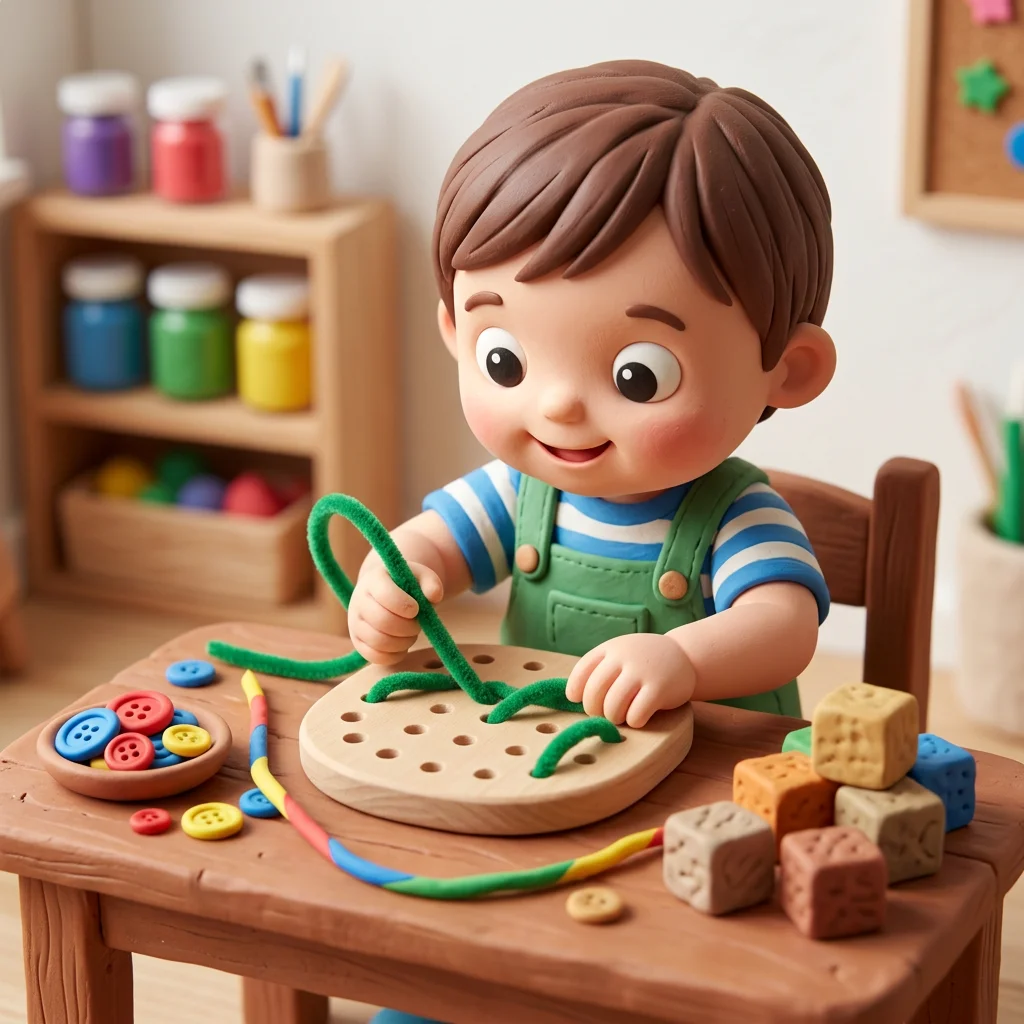
Have you ever watched your toddler carefully pick up a crumb from the floor or spend five minutes trying to fit a toy into the right hole?
It might look like simple play, but something important is happening behind the scenes.
Your child is developing their fine motor skills.
These small hand and finger movements play a huge role in your toddler’s growing independence. From feeding themselves with a spoon to turning pages in a book, fine motor skills help children tackle everyday tasks with confidence.
The good news? You don’t need expensive toys, worksheets, or complicated activities to support them.
In this guide, I’ll share some simple fine motor activities for toddlers that you can set up at home using everyday items.
What Fine Motor Skills Should Toddlers Be Learning?
Fine motor skills involve the small muscles in your child’s hands, fingers, and wrists.
Between 18 months and 3 years old, many toddlers begin developing skills such as:
- Picking up small objects using their thumb and finger
- Stacking blocks
- Turning pages in books
- Holding chunky crayons
- Using spoons and forks
- Opening containers
- Attempting zips and simple fasteners
You may notice your toddler naturally seeking out opportunities to practise these skills. They might peel stickers, poke fingers into small spaces, or insist on feeding themselves.
These everyday moments are all part of their development.
If you’re looking for activities suitable for both toddlers and preschoolers, be sure to read my complete guide to Easy Fine Motor Skills Activities for Toddlers & Preschoolers.
Why Fine Motor Skills Matter More Than Parents Realise
When parents hear “fine motor skills,” they often think about writing But writing is only one small piece of the puzzle. Strong fine motor skills help toddlers:
- Feed themselves independently
- Learn to dress themselves
- Build confidence through success
- Explore toys and materials more effectively
- Develop the hand strength needed for future learning
As a former teacher and developmental play specialist, I’ve often seen parents worry because their child isn’t interested in drawing yet.
The reality is that before children can control a pencil, they need lots of opportunities to strengthen the muscles in their hands through play.
A Common Mistake
Many parents assume fine motor development starts with crayons and pencils.
In reality, toddlers build these skills through everyday play experiences long before formal writing becomes important.
One of the best ways to support development is to focus on playful exploration rather than academic tasks.
5 Simple Fine Motor Activities Using Things You Already Have at Home
The best toddler activities are often the simplest.
1. Pom Pom Rescue
Place pom poms (or cotton balls) into a muffin tin and loosely cover each section with masking tape.
Invite your toddler to pull the tape away and rescue the pom poms.
Skills developed:
- Pincer grasp
- Finger strength
- Problem-solving
2. Sticker Play
Offer removable stickers and a piece of paper.
Allow your toddler to peel and stick freely.
Skills developed:
- Hand-eye coordination
- Finger strength
- Bilateral coordination
3. Water Transfer Play
Provide two containers and a sponge, turkey baster, or medicine dropper.
Encourage your child to move water from one container to another.
Skills developed:
- Grip strength
- Hand control
- Concentration
4. Posting Activities
Cut a slot into a container and provide large buttons, cards, or craft sticks.
Invite your toddler to post them through the opening.
Skills developed:
- Precision
- Hand-eye coordination
- Wrist control
5. Large Peg Activities
Offer chunky pegs or clothespins for squeezing and attaching.
Skills developed:
- Finger strength
- Hand stability
- Coordination
Everyday Activities That Build Fine Motor Skills Without Extra Prep
You don’t always need a dedicated activity.
Many everyday tasks provide excellent fine motor practice.
Try encouraging your toddler to:
- Help peel bananas
- Pick up small snack items
- Open simple containers
- Turn pages in books
- Help put toys away
- Pull socks off
- Push straws into drink cartons
- Carry small objects around the house
One activity that surprised me when my own son was little was posting raisins into a small container.
He repeated it again and again for weeks.
At first, it seemed too simple to be “educational.”
Looking back, he was strengthening the exact hand muscles and coordination skills that would later support drawing, dressing, and writing.
Sometimes the simplest activities are doing the most important work.
Signs Your Toddler’s Fine Motor Skills Are Improving
Development often happens gradually, making it easy to miss.
You may notice your toddler:
- Picking up smaller objects more easily
- Showing more persistence when tasks feel tricky
- Wanting to feed themselves
- Becoming interested in dressing independently
- Holding crayons with greater control
- Using both hands together more effectively
Perhaps most importantly, you’ll often see growing confidence.
That determination to say “I do it!” is often a sign that development is progressing beautifully.
Remember, all children develop at their own pace.
Rather than comparing your child to others, focus on providing opportunities to play, explore, and practise.
Those small daily experiences add up over time.
Fine Motor Development Happens Through Play
Supporting your toddler’s fine motor development doesn’t need to feel overwhelming.
Simple, playful experiences are often the most effective.
Whether your child is peeling stickers, transferring water, posting objects into containers, or helping with everyday tasks, they’re building important skills that support independence, confidence, and future learning.
The goal isn’t perfection.
The goal is providing opportunities to explore, try, and grow.
Other posts you might enjoy:
Simple Playdough Activities That Support Learning at Home
Playful Sorting Activities That Boost Toddler Confidence and Focus
Unlock Your Child’s Potential: Why Supporting Their ‘Thing’ Matters
Frequently Asked Questions
What are the best fine motor activities for a 2-year-old?
Simple activities such as sticker play, pom pom rescue, water transfer, posting games, and playdough are excellent for developing hand strength and coordination.
How can I improve my toddler’s fine motor skills at home?
Offer opportunities for hands-on play, self-feeding, dressing practice, building toys, and sensory activities. Everyday tasks often provide valuable fine motor practice.
What fine motor skills should a 2-year-old have?
Many 2-year-olds can stack blocks, turn pages, hold crayons, use a spoon, and pick up small objects using a pincer grasp. Development varies from child to child.
Do puzzles help fine motor development?
Yes. Age-appropriate puzzles encourage hand-eye coordination, finger strength, problem-solving, and precision.
How often should toddlers do fine motor activities?
Little and often works best. Fine motor development happens naturally throughout the day during play and everyday routines.
Want More Easy Play-Based Activity Ideas?
If you’re looking for simple ways to support your toddler’s development without spending hours planning activities, join the Learning Lighthouse newsletter.
Each week you’ll receive practical play ideas, child development tips, and encouragement to help you feel confident as your child’s first teacher.
Because learning through play doesn’t have to be complicated.
Want to track your child’s progress with ease?
I’ve created a free set of Developmental Activity Flashcards just for parents like you! You’ll get age-appropriate milestones and simple play ideas to support your child, without the overwhelm.
👉 Download your free activity cards here
And if you need more tips, advice and support with the ‘how’ and ‘why’ behind learning through play activities, you can join my FREE Facebook group here. I hope to see you in there.
Karmal x
Visit my website www.learninglighthouse.net for free downloads, video tutorials and more.
Leave a Reply