As your preschooler grows, you may start hearing more about “school readiness.”
Perhaps you’ve wondered:
“Should my child be writing their name yet?”
“Do they need more pencil practice?”
“How can I help them get ready for school?”
It’s completely natural to think about these things, especially as school starts to feel closer. But here’s something many parents don’t realise, before children can write confidently, they need strong fine motor skills. And the best way to build those skills isn’t through worksheets or endless handwriting practice. It’s through play.
In this article, we’ll explore why fine motor skills are so important for preschoolers and share simple, fun activities that help prepare little hands for learning, independence, and future writing success.
Why Fine Motor Skills Are Important Before Starting School
Fine motor skills involve the small muscles in the hands, fingers, and wrists. These muscles help children complete everyday tasks such as:
- Holding a pencil
- Using scissors
- Buttoning clothes
- Opening lunch containers
- Drawing and colouring
- Managing zips and fasteners
Many parents assume school readiness means learning letters and numbers. While those skills certainly matter, children also need the physical ability to control their hands comfortably.
Strong fine motor skills help children feel capable, independent, and confident when they begin new challenges.
As a former primary school teacher, I’ve seen many children arrive at school knowing their letters but struggling with tasks like holding scissors, opening snack packets, or controlling a pencil.
The good news is that these skills can be developed naturally through playful experiences at home.
If you’re looking for activities suitable for both toddlers and preschoolers, you can find even more ideas in our complete guide to Easy Fine Motor Skills Activities for Toddlers & Preschoolers at Learning Lighthouse.
Fine Motor Skills Preschoolers Use Every Day
One of the easiest ways to support development is to recognise how often preschoolers already use fine motor skills. You might notice your child:
- Drawing detailed pictures
- Colouring inside shapes
- Building with smaller construction toys
- Threading beads
- Dressing themselves
- Using cutlery independently
- Completing puzzles
- Helping with simple cooking tasks
These activities all strengthen coordination and hand control.
Every time your child twists a lid, cuts paper, or threads a bead, they’re strengthening muscles that will later support handwriting and other classroom tasks.
The goal isn’t to rush learning. It’s to give children opportunities to practise meaningful skills through everyday experiences.
5 Fun Fine Motor Activities for Preschoolers
If you’d like to offer a little extra support, these simple activities are both enjoyable and effective.
1. Threading Necklaces
Use pasta tubes, cut straws, or large beads and invite your child to thread them onto a shoelace or pipe cleaner.
Skills developed:
- Hand-eye coordination
- Concentration
- Finger control
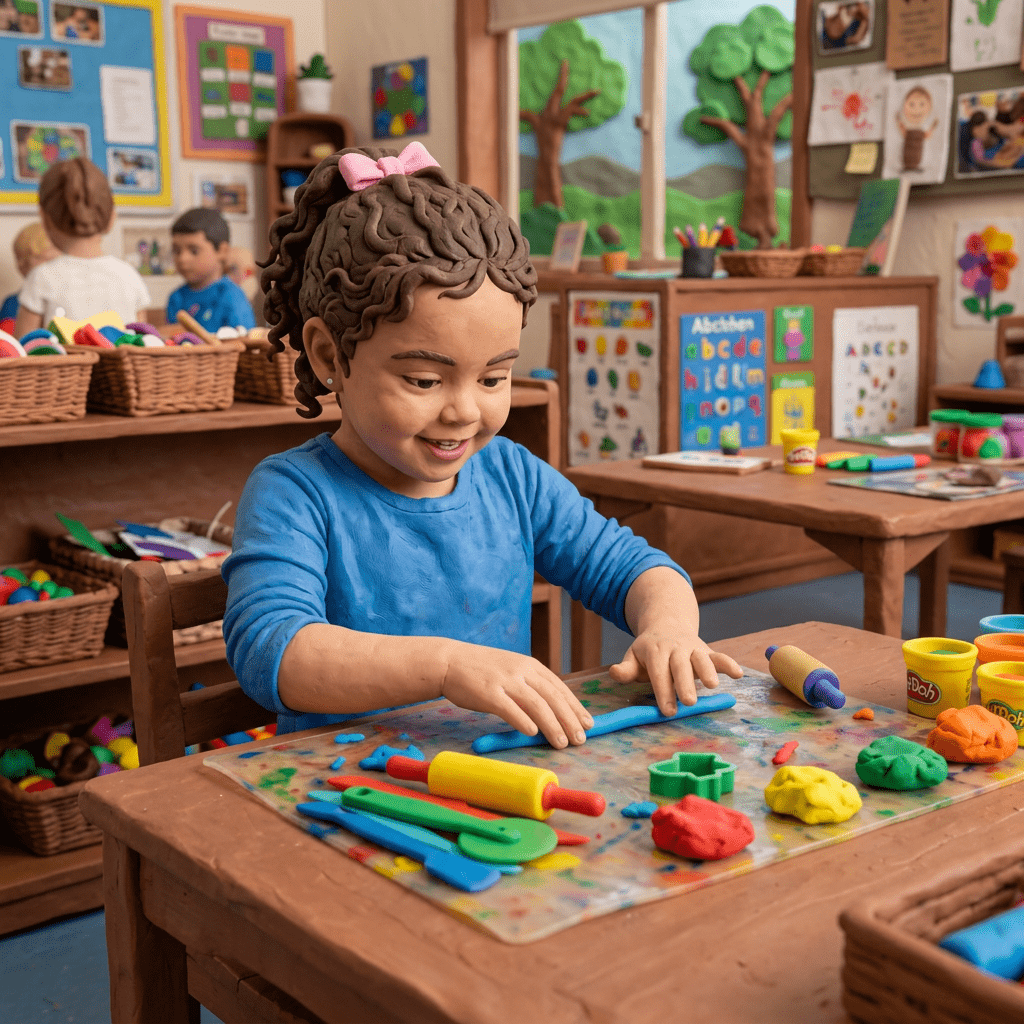
2. Playdough Tool Station
Provide playdough along with rolling pins, cookie cutters, child-safe knives, and plastic scissors.
Encourage your child to roll, squash, cut, and create.
Skills developed:
- Hand strength
- Bilateral coordination
- Creativity
3. Cutting Challenges
Draw simple lines, zigzags, or shapes for your child to cut along using child-safe scissors.
You can also provide paper straws or strips of card for snipping.
Skills developed:
- Scissor control
- Hand strength
- Focus
4. Tweezer Sorting Games
Provide pom poms, buttons, or small objects and encourage your child to sort them into containers using tweezers.
Skills developed:
- Pincer grip
- Precision
- Hand stability
5. Hole Punch Art
Invite your child to use a single-hole punch to create patterns, borders, or designs.
Skills developed:
- Grip strength
- Coordination
- Wrist stability
Many children find these activities feel like games, but they are doing important developmental work at the same time.
The Biggest Fine Motor Mistake Parents Make
One of the most common mistakes I see is introducing too much handwriting practice too soon.
When children struggle to write neatly, our instinct is often to provide more writing practice. But sometimes the problem isn’t writing itself – it’s hand strength.
Imagine asking someone to run a marathon before they’ve developed the muscles needed to run comfortably. The same principle applies to writing.
If writing feels difficult or frustrating for your child, the answer is often more play, not more worksheets.
Activities such as playdough, threading, cutting, building, and squeezing strengthen the muscles children need before handwriting becomes comfortable. When we focus on strengthening hands first, writing often becomes much easier later on.
How to Know Your Preschooler Is Getting Ready for Writing
Parents often ask what signs indicate that a child is developing the skills needed for writing.
You may notice your preschooler:
- Drawing more detailed pictures
- Holding crayons with greater control
- Spending longer periods focused on activities
- Cutting more accurately
- Managing buttons and zips independently
- Showing greater persistence when tasks feel challenging
Perhaps most importantly, you’ll notice growing confidence. You may hear them say:
“Let me do it myself!”
That desire for independence is often a wonderful sign that development is progressing.
Remember, children develop at different rates. Rather than focusing on what your child “should” be doing, focus on providing opportunities to play, explore, and practise. Those experiences build the foundation for future learning.
School Readiness Starts With Play
Preparing your preschooler for school doesn’t require endless worksheets or formal lessons. The strongest foundations are often built through simple, meaningful play experiences.
Threading beads, cutting paper, building with blocks, using playdough, and helping with everyday tasks all strengthen the small muscles that support writing, independence, and confidence.
Learning through play isn’t a distraction from school readiness. It is school readiness.
By creating opportunities for your child to explore, create, and problem-solve, you’re helping them develop skills that will support them long after they start school.
Other posts you might enjoy:
Easy Fine Motor Skills Activities for Toddlers & Preschoolers
How to Help Your Preschooler Feel Confident and Ready for Nursery
How to Nurture Your Preschooler’s Friendships at Home
Frequently Asked Questions
What are good fine motor activities for preschoolers?
Threading, cutting, playdough, tweezer games, puzzles, construction toys, and hole punch activities are all excellent for building fine motor skills.
How do fine motor skills help with handwriting?
Fine motor skills strengthen the muscles in the hands and fingers, helping children control pencils more comfortably and accurately.
Does playdough improve fine motor skills?
Yes. Rolling, squeezing, pinching, and shaping playdough strengthens the small muscles needed for writing, cutting, and self-care tasks.
What fine motor skills should a 4-year-old have?
Many 4-year-olds can use scissors, draw simple pictures, hold crayons with control, complete puzzles, and manage some dressing tasks independently. Development varies between children.
How can I prepare my preschooler for writing?
Focus on playful activities that build hand strength and coordination rather than formal handwriting practice. Playdough, threading, cutting, drawing, and building are all excellent choices.
Want More School-Readiness Activities Without the Pressure?
If you’d like simple, developmentally appropriate activities that support your preschooler’s learning through play, join the Learning Lighthouse newsletter.
Each week you’ll receive practical activity ideas, child development insights, and easy ways to build confidence, independence, and school readiness at home.
Because preparing for school doesn’t have to mean sitting at a table. It can happen through play, connection, and everyday moments.
Want to track your child’s progress with ease?
I’ve created a free set of Developmental Activity Flashcards just for parents like you! You’ll get age-appropriate milestones and simple play ideas to support your child, without the overwhelm.
👉 Download your free activity cards here
And if you need more tips, advice and support with the ‘how’ and ‘why’ behind learning through play activities, you can join my FREE Facebook group here. I hope to see you in there.
Karmal x
Visit my website www.learninglighthouse.net for free downloads, video tutorials and more.
Leave a Reply